
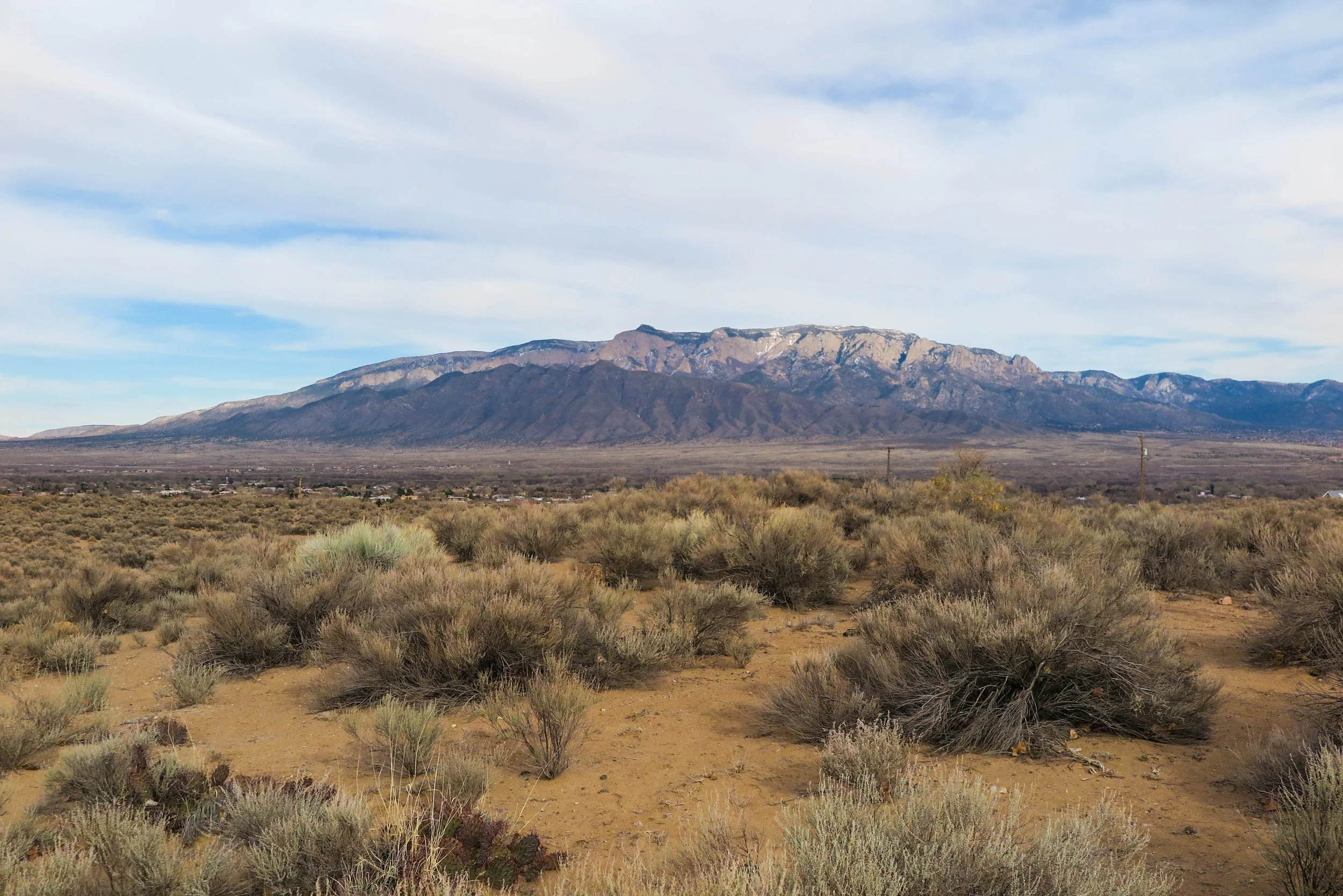
Sandia Land Transfer
History, Myths & Facts
The Issue
The Pueblo of Sandia is seeking legislation from Congress that would transfer nearly 10,000 acres of public land on the west side of the Sandia Mountains to the Pueblo of Sandia, making the land part of the Sandia Reservation.
The land is currently held in a public trust enacted by congress in 2003 with the T'uf Shur Bien Preservation Trust Area Act and the proposal we’re debating would transfer management of the 10,000 acres away from the U.S. Forest Service.
Supporting Documents
T’uf Shur Bien Preservation Trust Area Act (2003)
Why the history matters

The current proposal did not arise on an empty piece of land.
The approximately 9,890 acres known as the T’uf Shur Bien Preservation Trust Area are the subject of a federal law that Congress enacted in 2003 after years of litigation and negotiation between the United States, the Pueblo of Sandia, private landowners, and other parties.
That law was not simply a land-management plan. It was a settlement of a longstanding dispute over the Pueblo’s claim to the land.
Congress was unusually specific about what that settlement was intended to accomplish.
The law simultaneously:
recognized and protected the Pueblo's cultural and traditional interests;
confirmed the federal status of the National Forest and wilderness land;
protected the national forest and wilderness character of the area;
protected the public's longstanding use and enjoyment of the area;
established specific Pueblo participation in management;
extinguished the Pueblo's remaining claims to ownership of the area; and
required Congress to specifically authorize any future transfer of federal title.
Those details are at the heart of today's debate.
The History
1748: The Sandia Pueblo Land Grant
Congress's findings in the 2003 law state that the Pueblo of Sandia received a land grant from a representative of the King of Spain in 1748.
Congress further found that the grant was recognized and confirmed by Congress in 1858.
That history is explicitly recognized in the 2003 statute. The disagreement arose later over the location and extent of the grant's eastern boundary.
The Federal Surveys
According to the findings Congress adopted in 2003, the Pueblo contended that federal surveys of its historic grant had erroneously excluded land within what became the Cibola National Forest, including part of the Sandia Mountain Wilderness.
That dispute ultimately became a federal lawsuit.
1994: Pueblo of Sandia v. Babbitt
In 1994, the Pueblo filed a civil action against the Secretaries of the Interior and Agriculture in federal district court in Washington, D.C.
The case was Pueblo of Sandia v. Babbitt, Civ. No. 1:94CV02624.
The Pueblo asserted that federal surveys had incorrectly excluded portions of its historic grant from federal recognition.
The dispute was fundamentally a dispute over land title and the boundaries of the Pueblo's historic grant.
Congress later identified two Department of the Interior Solicitor opinions as part of the dispute:
December 9, 1988, Opinion M-36963
January 19, 2001, Opinion M-37002
The 2003 law specifically addresses the issues associated with those opinions and the litigation.
2000: The Settlement Agreement
The parties reached an Agreement of Compromise and Settlement on April 4, 2000.
The 2003 statute incorporated that settlement agreement into federal law.
This matters because the 2003 law was not Congress independently deciding what should happen to the mountain. It was Congress legislating a negotiated settlement.
2003: Congress Settles The Dispute
On February 20, 2003, Congress enacted the T’uf Shur Bien Preservation Trust Area Act.
Congress stated that the purposes of the law included establishing the T’uf Shur Bien Preservation Trust Area, confirming the status of the national forest and wilderness land, and providing the Pueblo, the other parties, and the public with a “fair and just settlement” of the Pueblo's claim.
Congress was not merely creating a special management zone. It was settling a title dispute.
2026: Sandia Pueblo Reopens The Dispute
Sandia Pueblo is asking NM Congresswoman Melanie Stansbury to introduce federal legislation that would fundamentally change the 2003 arrangement by transferring all 10,000 acres of land directly to the Pueblo.
If Congresswoman Stansbury introduces legislation,Congress would be asked to revisit the legal framework it created in 2003 and change the ownership and jurisdictional status of nearly 10,000 acres of the Sandia Mountains.
These parties have voiced objections and concerns about the land transfer proposal:
These parties have voiced support for the land transfer proposal:
Congresswoman Melanie Stansbury (D)
Sandoval County Manager, Wayne Johnson
Sandoval County Commissioners:
Katherine A. Bruch (D)
Jon Herr (R)
Michael Meek (R)
Jordan Juarez (R)
Joshua Jones (D)
Governor of New Mexico, Michelle Lujan Grisham (D) (letter of support)
New Mexico Commissioner of Public Lands, Garcia Richard (D) (letter of support)
What Is the 2003 Agreement?
The 2003 T’uf Shur Bien Preservation Trust Area Act was a congressional settlement of the Pueblo of Sandia’s longstanding land claim involving the Sandia Mountains.
It did not transfer the federal land to the Pueblo.
It established the T’uf Shur Bien Preservation Trust Area within the Cibola National Forest and Sandia Mountain Wilderness.
The land remained federal National Forest and Wilderness land.
The Act recognized specific Pueblo cultural, ceremonial, and traditional-use rights.
It also protected public use and enjoyment of the area.
Congress intended the Act to resolve the underlying legal dispute and define the parties’ rights going forward.
Bottom line: The 2003 law was a negotiated congressional settlement balancing Pueblo cultural rights, federal land status, and public access. It is the legal framework that exists today and is central to evaluating any proposed new land transfer.
What the Pueblo Received in 2003
Congress created specific rights for the Pueblo while keeping title to the land firmly with the federal government.
Cultural access
The Pueblo receives free and unrestricted access to the Area for traditional and cultural uses, subject to specified federal law.
The statute defines traditional or cultural use to include ceremonial activities and the noncommercial use, hunting, trapping, or gathering of plants, animals, wood, water and other natural resources.
Management participation
The Pueblo also received specific consultation rights, including:
the right to consent to or withhold consent from certain new uses;
consultation regarding modified uses;
consultation regarding management and preservation; and
dispute-resolution procedures.
The 2003 settlement therefore created a special consultation management structure within federal ownership.
Pueblo does not have a general right to exclude people
This is one of the clearest provisions in the law.
The Trust Act says the Pueblo's recognized rights and interests do not include any right to exclude persons or governmental entities from the Area.
That is a very different legal arrangement from ordinary tribal trust land.
Public access remains under federal administration
The Trust Ac states that, except for the Pueblo's special authority over traditional and cultural access, access to and use of the Area for all other purposes shall continue to be administered by the Secretary.
The 2003 law deliberately separates pueblo cultural access and rights from general public access and use.
What the Pueblo Gave Up
This is arguably the most overlooked part of the history.
Congress confirmed United States title
The Trust Act provides that, except for the specific rights and interests Congress recognized in the settlement, “The United States' title to the Area is confirmed.”
The same section says the Pueblo's other claims to right, title and interest in the Area, including aboriginal claims and related boundary, survey, trespass and monetary-damage claims, were permanently extinguished.
The 2003 settlement therefore did not simply leave the ownership question unresolved.
Congress confirmed United States title and extinguished the remaining Pueblo claims, subject to the rights specifically created by the settlement.
Pueblo agreed to the extinguishment
The Trust Ac states that, as provided in the Settlement Agreement, the Pueblo agreed to the relinquishment and extinguishment of the claims covered by the statute.
Congress then stated that the rights and interests it granted to the Pueblo constituted adequate consideration for that extinguishment.
The agreement was intended to be durable
Congress intended that the rights and interests recognized for the Pueblo could only be diminished by a future Act of Congress specifically authorizing their diminishment.
In plain English: Congress deliberately made the settlement difficult to undo.
It was designed as a permanent legislative settlement, not a temporary Forest Service management arrangement.
What the 2003 Law Protects
Wilderness
The statute explicitly protects the existing Sandia Mountain Wilderness.
It says establishment of the Area does not affect, repeal or disestablish the wilderness designation.
It also prohibits uses that were prohibited by the Wilderness Act as of February 20, 2003.
National Forest character
Congress specifically required preservation of the national forest character of the Area.
The law created a special statutory protection around its federal status.
Public use and enjoyment
The statute expressly recognizes and protects the public's longstanding use and enjoyment of the Area in perpetuity.
That is not simply a Forest Service policy or management preference.
It is federal statutory language.
Existing uses
The 2003 law carefully distinguishes between existing uses, modified uses and new uses.
An existing use is generally a use occurring in the Area as of February 20, 2003, or a use authorized during the specified period before that date.
A modified use is an existing use that is changed or reconfigured but not significantly expanded.
A new use is generally something that was not occurring in the Area as of February 20, 2003, or an existing use that is significantly expanded or altered.
That distinction is important for understanding recreation and under which management decisions the Pueblo is consulted.
What the 2003 Law Does Not Allow
The Pueblo has rights under the settlement, but the are not unlimited.
It expressly says those rights do not include:
the right to sell, lease, convey or exchange the land;
exemption from federal wildlife laws;
the right to engage in prohibited uses; or
the right to exclude people or governmental entities from the Area.
The statute also prohibits certain activities and protects the Area from mineral claims.
The Most Important Ownership Provision
It states that no right, title, or interest of the United States in the Area may be conveyed or exchanged with any person, trust, or governmental entity, including the Pueblo, without specific authorization of Congress.
The Forest Service therefore cannot simply decide on its own to transfer the land.
Congress expressly reserved that decision to Congress.
The 2014 Amendment (Public Law 113-119)
The history did not end in 2003.
The original settlement authorized a land exchange involving approximately 700 acres outside the core Area. That exchange became complicated and was not completed as originally contemplated.
Congress therefore enacted the Sandia Pueblo Settlement Technical Amendment Act in 2014.
It amended the 2003 Act and created a mechanism for transferring specified National Forest land to the Secretary of the Interior to be held in trust for the Pueblo if the authorized land exchange was not completed.
This demonstrates an important point that gets lost in the current debate:
Congress has previously authorized a limited transfer of land into trust for Sandia Pueblo under the settlement.
But that provision concerned the specific land and exchange contemplated by the settlement. It is not the same thing as transferring the entire approximately 9,890-acre T’uf Shur Bien Area.
What Is Different About this 2026 Proposal?
The current proposal is fundamentally different in scale and legal consequence.
The proposal seeks to move the entirety of the 9,890-acre T’uf Shur Bien Preservation Trust Area out of its existing National Forest System framework and into federal Indian trust status directly for Sandia Pueblo.
That means the question is no longer simply: “How should the Forest Service manage this special federal area?”
It becomes: “Should Congress replace the legal framework it created in 2003 with a different ownership and jurisdictional framework?”
That is a much bigger question.
Facts and Myths
-
FACT: Sandia Pueblo’s own Governor, Stuart Paisano, described the settlement as the “best way” to protect the mountain, protect homeowners’ private property rights and right-of-way, and protect Sandia Pueblo’s ability to worship on the mountain. The settlement was presented at the time as a solution that protected multiple interests, not as a temporary arrangement awaiting a future transfer of ownership.
-
FACT: This is not legally correct. The 2003 Trust Act confirms United States title to the Area and permanently extinguishes the Pueblo's other claims, subject to the rights specifically preserved by the settlement. The Pueblo has statutory rights and interests in the Area, but those rights are not the same thing as ownership.
-
FACT: The 2003 settlement was the result of direct negotiations involving Sandia Pueblo and they had strong support Pueblo members. A poll commissioned during the settlement process showed that out of 400 respondents, 77% supported the proposed settlement, while 15% opposed it and 8% were undecided.
-
FACT: Under the 2003 framework, the Pueblo does not have a general right to exclude people from the Area.
-
FACT: It would change the legal framework under which the land is held and administered. The current Area is part of the National Forest System and the Sandia Mountain Wilderness. The proposed transfer would place the land in federal Indian trust status directly for the Pueblo. That is a change in legal status, not merely a change in which office maintains trails.
-
FACT: Pueblo officials have publicly stated that they intend to maintain public access to existing roads, utilities and established trails. Those statements are important and should be taken seriously. But there is a difference between a political commitment and a statutory public right codified in the law. The question for the public and Congress must be: Exactly what public access rights will be legally enforceable after the transfer?
-
FACT: The Sandia Mountain Wilderness has been protected by Congress since 1978, and its wilderness designation can only be changed by an act of Congress. Transferring the underlying federal land to Sandia Pueblo does not automatically erase the history or protections of the wilderness designation. The question is whether changing federal ownership would provide better protection than the existing federal wilderness protections already in place.
-
Fact: If cultural or historical connection alone established legal ownership, then private property titles would be meaningless, including yours. The same legal principle applies here: ownership is determined by law and title, not simply by historical or cultural connection. The United States holds title to this land, and Congress established the 2003 trust arrangement. The proposed transfer would change that ownership. There are also two enclave private neighborhoods that exist inside this Trust boundary.
-
Fact: The intent of all parties involved in the 2003 settlement was that it would exist in perpetuity. This word is used multiple times in the agreement. The proposed transfer would reopen a question that Congress addressed more than two decades ago.
-
FACT: The history is precisely why the 2003 settlement matters. The Pueblo's historical and cultural relationship to the Sandias is explicitly recognized in federal law. So are the interests of the public. The 2003 Act did not require choosing between the two. It created a legal framework intended to protect both. Cultural significance is not the same as legal ownership.
-
The history of Indigenous dispossession is real and deserves to be acknowledged. But this particular dispute is a property boundary dispute and about what Congress legally established in 2003 to resolve that dispute and legal case with the Pueblo. At the time, the land was placed into the T’uf Shur Bien Preservation Trust Area as federally owned land, with the United States retaining title. The proposed legislation would now transfer that federal title to Sandia Pueblo. Calling it “Land Back” does not answer the legal questions about the existing trust, wilderness protections or public uses.
-
Fact: You can respect Sandia Pueblo’s cultural and spiritual connection to the Sandia Mountains while still questioning a proposed transfer of federally owned land. This debate is about law, land ownership, public access, and the terms Congress established in 2003.
-
Fact: It doesn't have to be framed that way. The goal should be to respect Sandia Pueblo’s cultural interests while also honoring the legal protections, existing uses, and public interests that Congress established in 2003.
-
Fact: The mountains can be deeply sacred to Sandia Pueblo while also being public lands where hiking, climbing, hunting, backpacking and other recreation have long occurred. Respecting cultural values and preserving legitimate public uses are not mutually exclusive.
What Is Actually at Stake
Some frame the debate as: Pueblo interests vs. public interests.
The 2003 law said it does not have to be that way and Congress already created a framework that recognizes both.
The real question in 2026 is whether that framework should be replaced.
If the land is transferred, Congress needs to answer questions that the 2003 settlement answered very specifically:
Ownership: Who will hold legal title?
Jurisdiction: Which government will have authority over the land and the people using it?
Public access: What uses will remain legal for non-Pueblo members?
Property owners: How will their road access and easements be protected?
Recreation: Will climbing, hiking, hunting, horseback riding, trail running, birding and other existing uses remain protected?
Existing trails: Which trails will remain open?
Informal trails: Will the public be permitted to travel outside designated trails?
Roads: Which roads will remain open, and who will maintain them?
Wilderness: Will the Sandia Mountain Wilderness designation remain intact?
Enforcement: Who will enforce access rules?
Legal remedies: If a future government closes an area that was promised to remain open, what legal remedy will the public have?
Future governments: Will today's promises bind future Pueblo governments?
Sovereign immunity: Will the Pueblo waive immunity for disputes involving public-access guarantees, or will Congress create another enforceable mechanism?
These aren't hypothetical philosophical questions.
They are the practical consequences of changing the legal structure of the land.
The Big Picture
The history of the Sandias is complicated.
The Pueblo of Sandia has a documented historic connection to the mountain and brought a serious legal claim concerning the boundaries of its historic grant.
Congress acknowledged that history and also enacted a settlement.
That settlement did something very specific: it confirmed federal title while granting the Pueblo substantial, permanent rights and protections and protecting the public's longstanding use and enjoyment of the land.
The current proposal asks Congress to change that arrangement.
That is why the debate should not be reduced to:
“Whose mountain is it?”The better question is:
“What did Congress settle in 2003, what protections did that settlement create, and what exactly would Congress be changing in 2026?”
Before changing the status of nearly 10,000 acres of the Sandia Mountains, the public deserves to see those questions answered in the actual language of the legislation.
The 2003 settlement was designed to make room for everyone: Sandia Pueblo, the wilderness, the National Forest, and the public. Whatever happens next should not casually undo that balance.